
Clean REST & GraphQL APIs, SDKs in 7 languages,interactive playground, and 18ms median latency. Fromsign-up to first call in under 5 minutes.
From first API call to production deployment — our developer ecosystem is built toget out of your way.
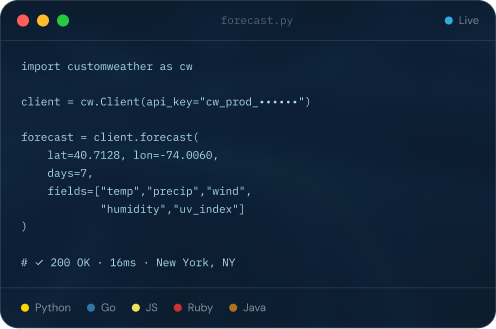
Official SDKs for Python, JavaScript/TypeScript, Go, Ruby, Java, Swift, and Rust. All open-source on GitHub with full test coverage.
Beautiful API reference with inline try-it-now code runner, auto-generated samples in every language, and versioned changelogs.
A fully isolated test environment with live data mocks, synthetic severe weather events, and historic replay — no production calls needed.
Query only the fields you need with our GraphQL endpoint — great for mobile apps where bandwidth matters. Introspectionenabled.
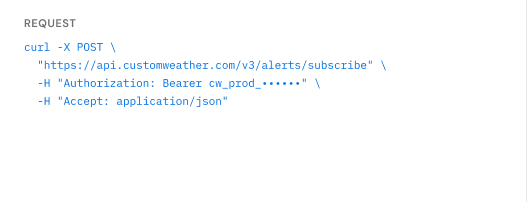
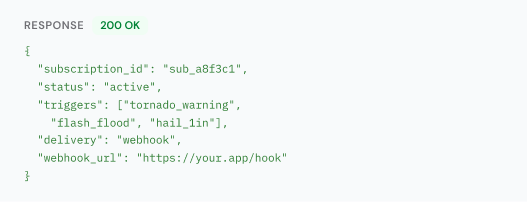
Subscribe to weather events — severe alerts, threshold crossings, daily forecast updates — delivered as real-time server-sent events orwebhooks.
XYZ raster tile server for radar, satellite, precipitation, and temperature overlays. Drop into Leaflet, Mapbox, or Google Maps inminutes.
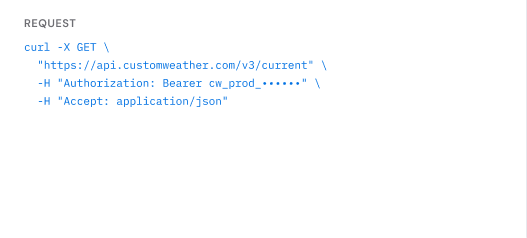
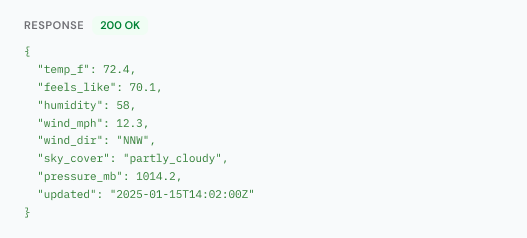
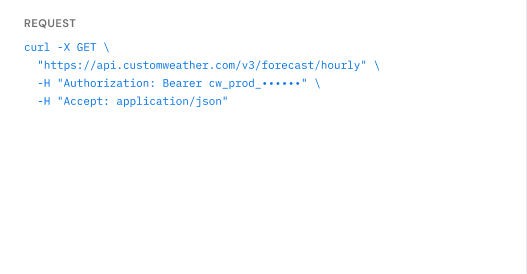
RESTful endpoints with consistent response shapes, ISO 8601 timestamps, andhuman-readable error messages.
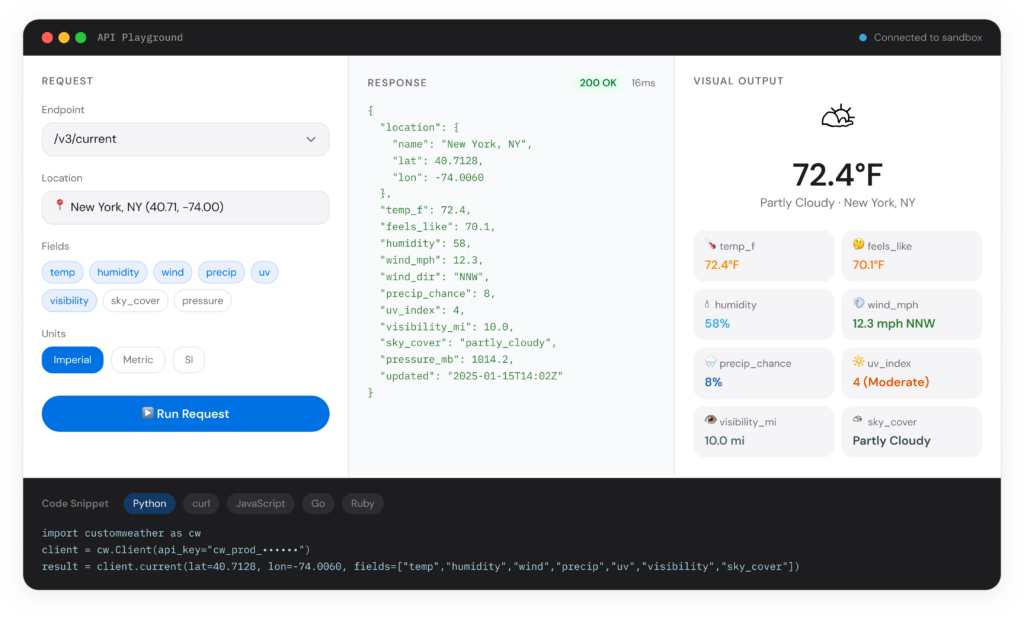
Live observations: temperature, humidity, wind, sky cover, pressure, visibility.
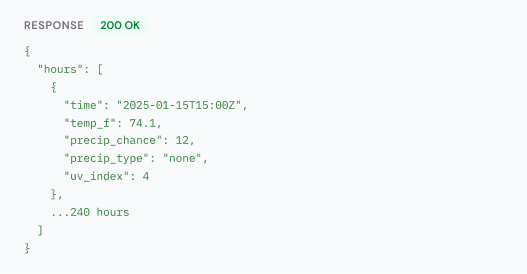
Hour-by-hour predictions up to 240 hours. Includes precipitation probability and type.
Subscribe a URL to receive severe weather alerts when thresholds are crossed.
Configure your request visually, run it against live data, and copy the generatedcode snippet in your language of choice.
Our migration guides map every endpoint, field name, and response format fromyour current provider. Most teams switch in under a day.
Limited historical depth, inconsistent QC, frequent outages
High cost at scale, limited marine/aviation coverage
Complex enterprise contracts, slow data refresh
No severe weather, no historical, no real SDKs
Sign up free. Your API key is ready in seconds — no credit card, no sales call.
Use our migration guide to match your existing calls to CustomWeather endpoints. Most map 1-to-1.
Shadow-run both APIs for one week, compare outputs, then flip the switch. Zero downtime.